Preventing falls at home.
Falling as you get older is quite common, and although most falls don't cause serious injury, they can leave you feeling upset and knock your confidence. However, the good news is
falls aren't an inevitable part of ageing
. There are lots of things you can do to
stay steady on your feet and safe in your own home
.
Ageing does affect your balance, muscle strength and bones but these
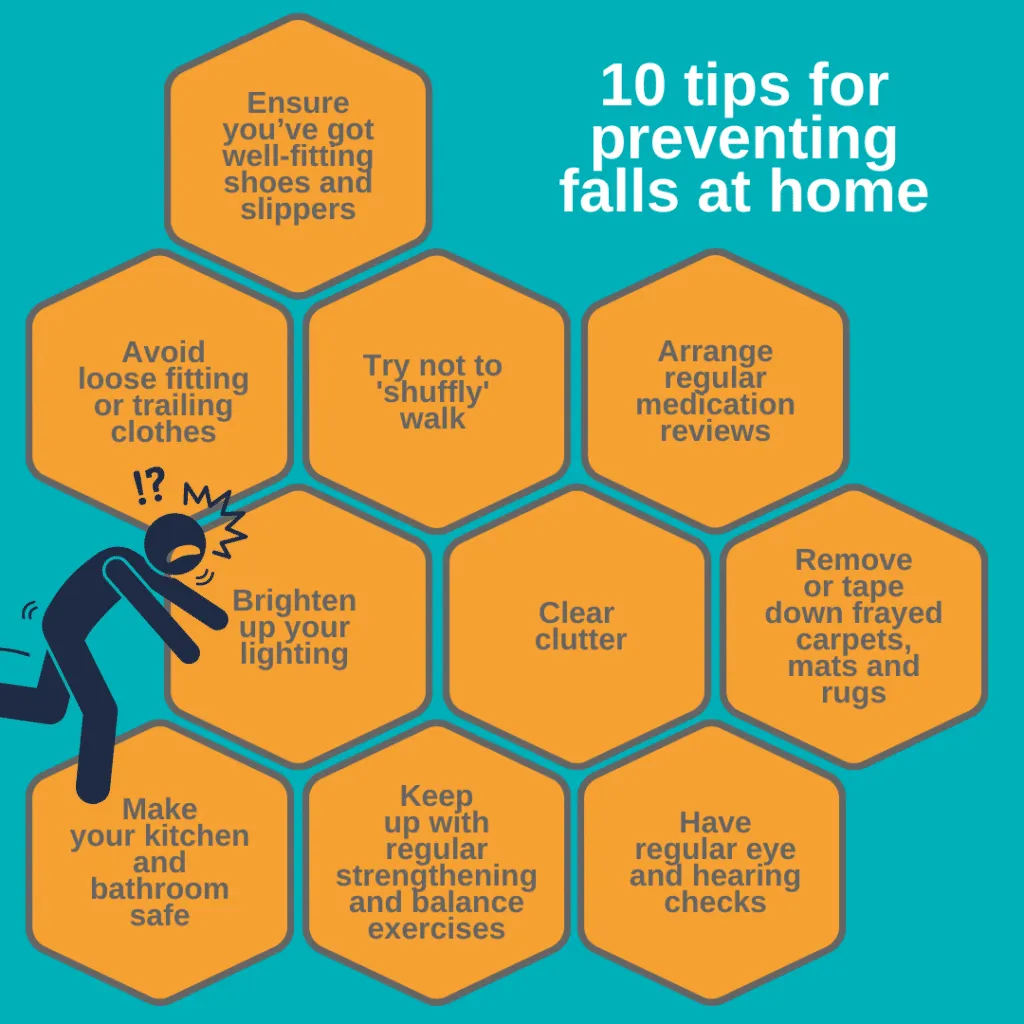
10 simple tips
can make all the difference in preventing falls at home and helping you
maintain your independence and confidence
.
Ensure you've got well-fitting shoes and slippers
Your feet will change shape as you age and we often lose some feeling and flexibility, so a well-fitted shoe/slipper is vital. Worn-out slippers may be like old friends, but it's time to say goodbye to them if they have holes in their soles, frayed uppers, broken-down backs or the fit is 'sloppy'. Slippers should fasten, stay on and provide grip. It's also important to take care of your feet by trimming your toenails regularly and seeing a GP or chiropodist about any foot problems.
Avoid loose fitting or trailing clothes
Always tie belts or cords on clothes and dressing gowns or remove them altogether. Hem trousers that are too long.
Have regular eye and hearing checks
Eyesight changes as you age and can lead to a trip or loss of balance. Some eye conditions such as macular degeneration, glaucoma and cataracts increase with age and it's important that these are detected at an early stage. Get your eyes and glasses checked regularly to detect any vision problems early.
Problems with your ears can severely affect your balance, and the risk of hearing loss increases with age. Talk with your GP if you notice hearing changes are affecting your day-to-day life.
Arrange regular medication reviews
If you're taking long-term medication, your GP should review your medicines at least once a year to make sure they're still right for you. It's particularly important that your medicines are reviewed if you're taking 4 or more medicines a day. Your GP may recommend alternative medication or lower doses if they feel the side effects increase your chances of having a fall.
Brighten up your lighting
Did you know
60-year-old eyes need 3 times more light than 20-year-old eyes
? Speak to a trusted, professional electrician about your lighting options to increase light in your home. It's worth keeping a torch by your bedside, leave the hall/landing light on or set up a night light. Also, avoid trailing cables from lamps that you could easily trip on. Consider installing two-way switches on the landing/hall and extra stair lighting.
Clear clutter
Make sure your walkways around the house, particularly around doorways, are clear. Make sure you tape any trailing extension leads to your skirting board. It's worth using cable tidies or boxes where possible to organise jumbled up wire around the TV.
Clutter can present a very real risk for falls so take a few minutes to look around your home with a critical eye.
A surprising number of people also trip over their pets so it's worth buying them a bright collar and bell to alert you they're there!
Remove or tape down frayed carpets, mats and rugs
Another tip that's often overlooked when it comes to preventing falls at home is to check all rugs have a non-slip underlay and replace any worn ones if possible.
Make your kitchen and bathroom safe
If you're always reaching up high for things, consider rearranging your cupboards so items you frequently use are within easy reach. Also make sure you clear up any spills straight away.
In the bathroom use a non-slip mat in the bath or shower and consider installing grab rails for extra support.
Try not to 'shuffly' walk
It's easy to get into the habit of not lifting your feet as high as you used to when walking but it increases your chance of tripping. Also, don't walk in socks or tights on hard floors as they can be very slippery.
Do regular strengthening and balance exercises
As you get older, your muscle strength and balance reduces, which can lead to a fall. Exercise aids greatly when preventing falls at home by maintaining strong muscles and bones, which in turn will help your balance. Check out our blog on
for lots of different exercises to try.
Guide to care at home
What to do next…
To further add to the ways you can go about preventing falls at home; you can request a home
hazard assessment
for you or someone you're worried about. Just ask your GP what is available locally, usually from your Occupational Therapy Service, local council or Fire and Rescue Service.
Saga, in association with Chartered Society of Physiotherapy have created this handing Get up and go guide to staying steady. It has lots of useful information including a checklist of your risk of a fall, how to reduce your risk, how to fall-proof your home and 6 exercises for strength and balance.
Sources: NHS, Age UK, Gov.uk, Public Health England, Saga, Chartered Society of Physiotherapy
Helping your loved one to continue living independently and confidently in their own home.
By providing a range of support at home, we're helping many clients across Bath & North East Somerset and West Wiltshire retain their independence and stay in control in the comfort of their own homes.
We’re always here if you want to chat about your care options
Speak to a real person about how care at home can help you or your loved one.